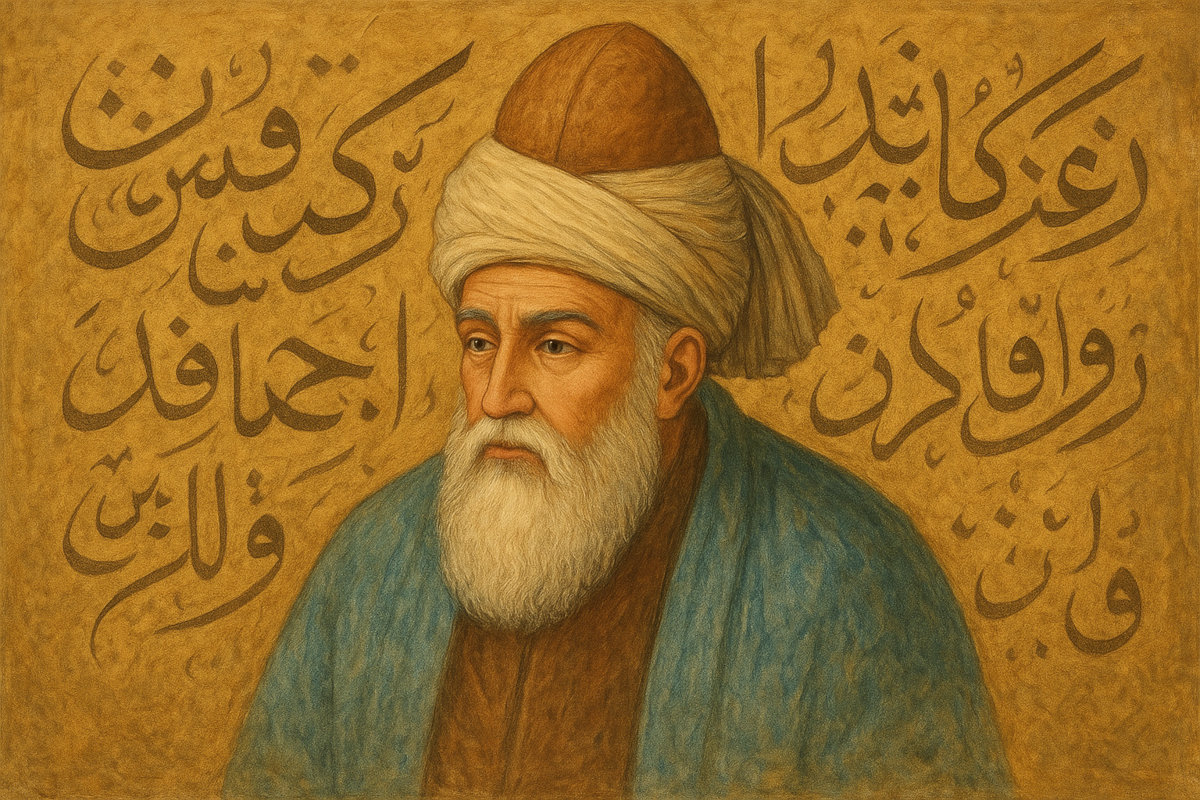
Jalal al-Din Rumi Biography: Life, Teachings & Legacy
Introduction
Jalal al-Din Rumi (1207–1273), widely known simply as Rumi, was a 13th-century Persian poet, Islamic scholar, theologian, and Sufi mystic. Today, Rumi is celebrated worldwide for his timeless poetry that transcends borders, languages, and religions. His verses focus on love, spirituality, divine connection, and the journey of the soul. In this blog, we explore the life, works, and enduring influence of Rumi.
Early Life of Rumi
Rumi was born on 30 September 1207 in Balkh (present-day Afghanistan), though some sources claim he was born in Wakhsh (modern-day Tajikistan). His full name was Jalal al-Din Muhammad Balkhi Rumi. Due to political instability and Mongol invasions, his family migrated westward and eventually settled in Konya, present-day Turkey, which became the center of his spiritual and literary journey.
Education and Spiritual Growth
Rumi received traditional Islamic education in theology, jurisprudence, Arabic, and philosophy. He was recognized as a respected Islamic scholar before his mystical transformation. His turning point came when he met the wandering dervish Shams of Tabriz in 1244. This deep friendship awakened Rumi’s inner mysticism, inspiring his poetry and teachings of divine love.
Teachings of Rumi
Rumi’s teachings centered on love as the essence of existence. He believed that true spirituality lies in connecting with God through love, compassion, and selflessness. His Sufi philosophy emphasized:
-
Unity of all beings – seeing God’s presence in everything.
-
Love as a spiritual path – divine love guiding the soul.
-
Inner transformation – moving beyond ego toward enlightenment.
-
Tolerance and inclusivity – embracing all humanity, beyond religion or nationality.
Major Works of Rumi
Rumi composed his works in Persian, though his influence spread globally through translations. His most famous writings include:
-
Masnavi (Mathnawi) – A six-volume masterpiece of spiritual wisdom, often called the “Quran in Persian”.
-
Divan-e Shams-e Tabrizi – A collection of lyrical poems dedicated to Shams.
-
Fihi Ma Fihi – Prose lectures explaining mystical thought.
-
Majalis-e Sab’a – A series of sermons reflecting his religious teachings.
Rumi’s Influence and Legacy
Rumi passed away on 17 December 1273 in Konya, Turkey. His mausoleum, the Mevlana Museum, remains a pilgrimage site for millions. His poetry has been translated into many languages, making him one of the most read poets in the world. UNESCO even declared 2007 as the “Year of Rumi” to honor his 800th birth anniversary.
Rumi’s message of peace, love, and unity continues to inspire seekers, scholars, and spiritual traditions across the globe.
The biography of Jalal al-Din Rumi is not just about the life of a poet but the story of a spiritual master whose teachings remain deeply relevant today. His timeless wisdom bridges cultures and religions, reminding us of the power of love and the oneness of humanity.